



Electric vehicles in Africa: what’s needed to grow the sector
In sub-Saharan Africa, high levels of particulate matter (PM2.5) pollution from vehicle tailpipe emissions cause poor health, developmental stunting, and even death. Vehicle emissions also contribute to global warming.
Electric vehicles could help solve these problems but they’ve been slow to take off in the region. Its biggest economy, South Africa, had only about 1,000 electric vehicles by 2022.
We are specialist transport engineers whose research has focused on electric vehicles and road freight transport in sub-Saharan Africa. In our work we look at how electric vehicles could contribute to reducing emissions in the region, and what is standing in the way of electrifying transport.
One of the reasons for low uptake is the high cost of electric vehicles. They also have limited range and their batteries are slow to charge: a problem for long distance or frequent driving.
Read more: Electric vehicles in South Africa: how to avoid making them the privilege of the few
The inability of countries to generate and distribute enough clean electricity is also a barrier to electrifying vehicles. Just over half of all electricity in the region comes from burning fossil fuels. Powering electric vehicles with electricity generated by burning fossil fuels wouldn’t necessarily reduce carbon emissions.
However, the rollout of electric motorcycles and small public transport vehicles has already begun. If all vehicles could be made locally, using clean energy, there would be tremendous economic benefits for the region.
Electric mobility is some way off
Transitioning to electric mobility requires clean energy provision, which means investing in electricity infrastructure. Electric vehicle charging stations can be installed fast: South Africa already has a very high electric vehicle ratio of one charger for every five cars, compared to the UK at 1:20. But these charging stations must be able to deliver electricity when vehicles need it. They need reliable, renewable energy stored in large battery systems to do so – and these large battery systems are still being developed.
In sub-Saharan Africa informal public transport moves about 72% of the region’s passengers. Freight moves goods in the absence of adequate rail. Electrifying these sectors needs careful planning.
| The Roam Air electric motorbike that Stellenbosch University drove from Kenya to South Africa on only solar power. Lewis Seymour.
Informal “paratransit” or “popular transportation” is made up of minibuses (matatu, ndiaga ndiaye, danfo, trotro), three-wheelers (tuk-tuk) and motorbikes (boda boda, moto).
Planning for the eventual electrification of informal taxis is complicated by the sector’s unscheduled, decentralised, often chaotic and demand-driven nature.
Freight transport is a leading indicator for economic growth, and for economies to grow, freight transport must grow. This means that national and local governments must plan and invest in high powered, fast charging stations along transport routes. These must be able to charge different sizes and kinds of trucks. The freight industry cannot absorb these costs alone.
Need for rapid change
The transport sector must make the transition to electric mobility faster than the breakneck speed at which smartphones were adopted if it is to meet Net Zero – an end to carbon emissions – by 2050. Costly electrical and civil infrastructure (roads, minibus termini, truck stops, electricity distribution networks) will be needed – and soon.
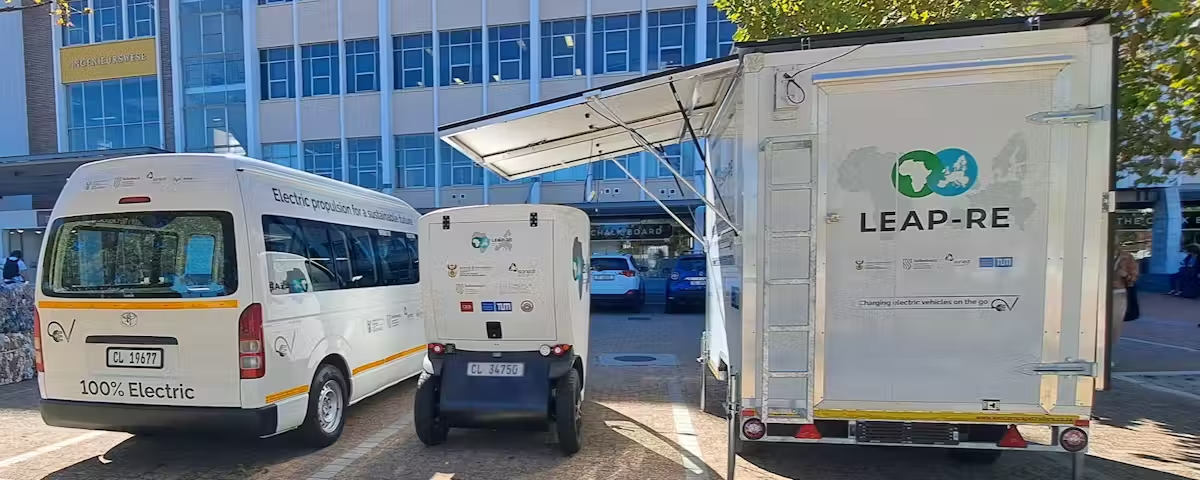
| Electric vehicles and a mobile charging unit. MJ Booysen
However, our results show that fleets will have to contain a mix of electric and combustion-based engines if countries want to continue to transport the same amount of goods and people they are currently transporting. This is because electric vehicles charge slowly. While a diesel minibus taxi takes only one minute to fill up with enough diesel to travel 750 kilometres, the fastest currently available electric minibus recharges at a mere 2km per minute with DC and 0.3km per minute with AC. The electric taxi’s range is also only 21% of the diesel equivalent.
Filling stations in the region generally store the equivalent of up to 225,000km worth of fuel for a diesel minibus. The same size of stationary electric battery storage will store a mere 16,000km for an electric equivalent minibus. Range-extending and potentially swappable battery storage can be used (where a trailer acts as a mobile battery bank to the vehicle, and is charged from a solar charging station to reduce emissions). But this will increase the cost so much that it may not be financially viable for the freight industry at all.
Building a local electric vehicle industry
Except for South Africa, the region has been a dumping ground for second hand vehicles from developed countries. The comparatively simple designs of electric vehicles provide an opportunity for sub-Saharan Africa to move away from accepting second hand vehicles and towards a new local electric vehicle industry.
Workers in hundreds of thousands of jobs making combustion engines could be reskilled to make electric vehicles. Africa already has the skills to design and produce the powertrain components, such as batteries and electric motors. Setting up local industries would also spare sub-Saharan Africa from being flooded by cheap electric vehicle imports that don’t contribute to local employment.
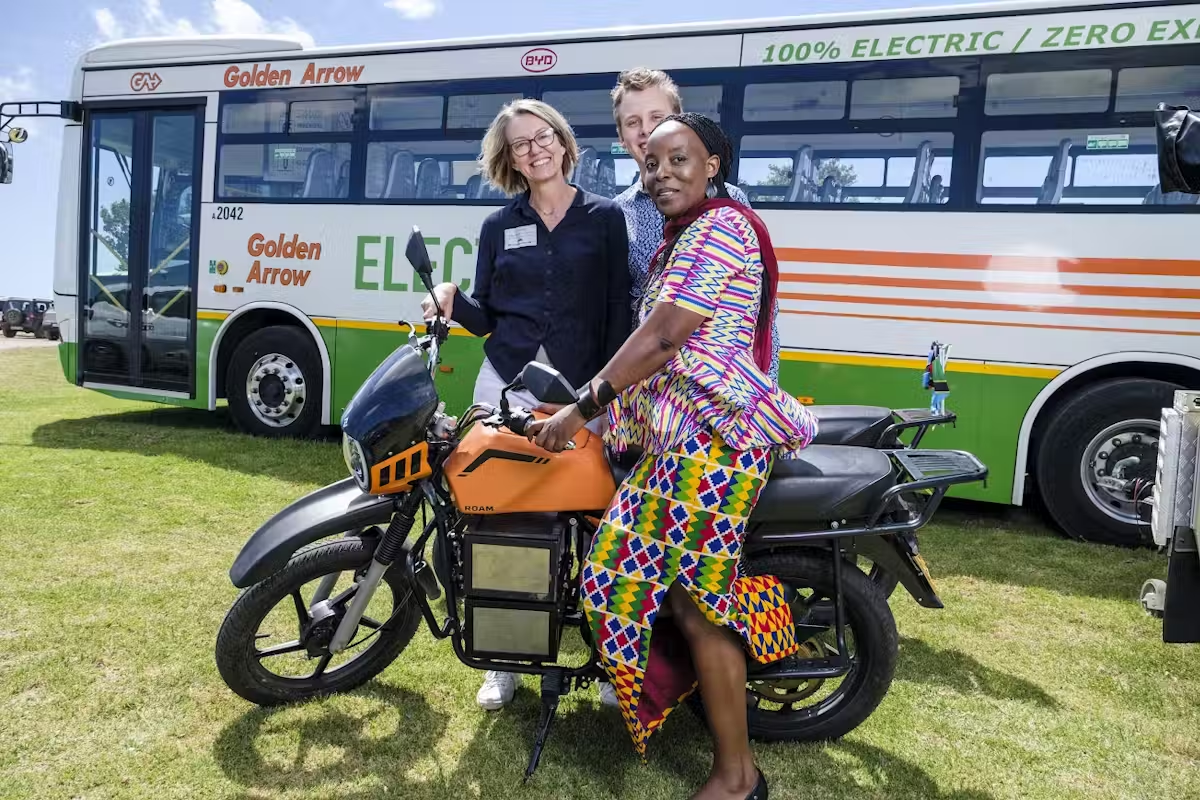
| Roam air electric motorbike and Golden Arrow’s electric bus at Stellenbosch University’s Electric Mobility Day. Stefan Els.
Ethiopia has recently banned the import of combustion vehicles. Africa’s first all-electric mass rapid transit was set up in Dakar, Senegal in 2023. The Golden Arrow bus company in South Africa purchased 120 electric buses this year. Heavy haul electric trucks are also entering the South African market space.
Africa has already produced tens of thousands of electric two- and three-wheelers used for public transport and last-mile delivery. These include Ampersand in Rwanda, Roam Electric in Kenya, and Spiro in Benin. Batteries are usually provided through swapping and payment by mobile phone. In South Africa, Mellowvans produce a last-mile three-wheeler.
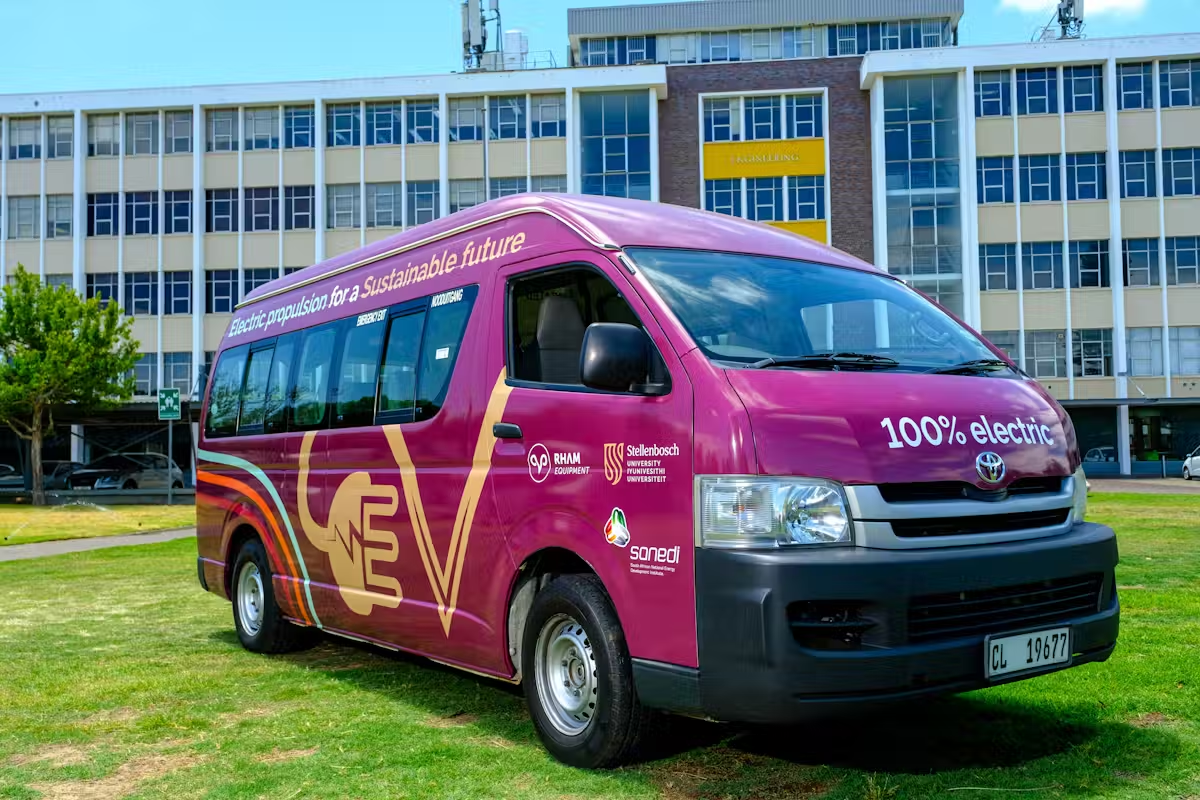
| The converted electric taxi. Stefan Els
A Roam Air electric motorbike recently completed the 6000km journey from Nairobi to Stellenbosch using only the region’s abundant solar power. In Kenya, BasiGO assembled buses locally and now provides finance for electric buses. Roam Electric makes locally designed electric buses (and motorbikes). Meanwhile, a project owned by the South African National Energy Development Institute at Stellenbosch University in South Africa has converted a petrol minibus taxi and a 65-seater diesel bus to electric.
Electrification is inevitable
The shift to electric vehicles is inevitable. These steps are needed first:
- Review transport policy related to freight vehicles, such as axle weight and vehicle length, to ensure that imported electric vehicles can operate on African road networks.
- Ensure paratransit is safe, efficient and equitable.
- Carefully consider import duties and incentives. Rwanda scrapped customs tax on electric vehicles to make them cheaper, but this led to an influx of old hybrid vehicles with depleted batteries. South Africa has vehicle import duties to protect local production, but an additional luxury tax on electric vehicles makes these expensive to buy.
- Rethink the taxation model. In South Africa, for example, fuel levies make up a chunk of national revenue.
To make the most of the electric mobility revolution, sub-Saharan African countries need policies and incentives to localise production and invest in green energy, lest they miss the bus.




Africa’s cities are growing chaotically fast, but there’s still time to get things right – insights from experts
Cities are vital engines of economic growth, innovation and social progress. They shape the futures of nations and the lives of millions.
In Africa, urbanisation is accelerating at an unprecedented pace. Cities are expanding rapidly to accommodate a booming population and a surging demand for jobs, housing and infrastructure. This can make life in many African cities very challenging due to high unemployment rates, limited infrastructure, and issues like housing shortages and inadequate public services.
The good news is that most of Africa’s urbanisation is yet to come, so there is still time to get things right. There’s the opportunity to learn from the successes and challenges faced by cities in other parts of the world.
Over the years we’ve published several articles that offer lessons for Africa’s cities. With this knowledge, African urban centres can build more sustainable, inclusive and resilient spaces that truly meet the needs of their communities.
Urban economist Astrid R.N. Haas writes that Africa is undergoing the fastest urban transition the world has experienced to date. It’s projected that nearly 1 billion more people will live in Africa’s cities by 2050. Earlier, China was in the top spot: between 1978 and 2010, over 700 million people moved to China’s cities.
There are some lessons that African countries can take from China.
As urbanisation progresses, Haas explains, demand for land will rise and therefore so will prices. But the beneficiaries of higher land prices will be property owners, unless there are mechanisms in place to recoup the value. City governments need to try to capture this value, boost revenue and reinvest in public goods and services.
Hong Kong is a prime example of effective land value management. Land revenue has funded high quality public transport, as well as social infrastructure like schools and hospitals.
Hong Kong uses multiple instruments to do this. In this article, Haas unpacks one of these – the land lease system.
Read more: Raising revenue from land: what African cities might learn from Hong Kong’s unique land-lease system
Cities have historically been the drivers of productivity and engines of economic growth. Astrid R.N. Haas argues, however, that one factor preventing this potential from being unlocked in African cities is how the cities are governed: it matters who makes the decisions and how they do it.
In this article, Haas highlights what it takes to run a city effectively.
First, cities must have institutions with clearly defined mandates. This can be done by creating a single agency responsible for a service or policy decision. In Lagos, Nigeria, for example, an agency was created which coordinates the work of all transport-related entities.
Second, municipal governments need the capacity to implement decisions. For example, in 2013 Baghdad’s deputy mayor created a steering committee to improve the city’s sewerage system. The committee brought together various senior city staff and helped improve the timeliness and overall streamlining of decision making. This contributed towards significant improvements to the city’s sewerage network.
Third, making and implementing decisions requires sufficient legitimacy. This can be done, for instance, through elections, improving public communication or participatory budgeting – a mechanism which creates an established channel for identifying priority projects for people.
Read more: Getting the right institutions in place to run Africa’s cities efficiently
The need for effective governance is highlighted in this article by urbanisation expert Patricia Jones. She argues that, done right, urbanisation has the potential to raise productivity and living standards across Africa.
Jones writes that successful cities serve two functions: they provide liveable environments for workers and their families; and they provide productive environments for businesses.
To do this, there needs to be a focus on co-ordination and planning.
Read more: Done right, urbanisation can boost living standards in Africa
One of the challenges to Africa’s cities that needs to be highlighted is unsustainable urbanisation. It creates a situation where infrastructure development and service delivery aren’t keeping pace with the city’s growth, creating an unsafe and unhealthy environment. One approach to dealing with this is through family planning.
Demographer Sunday Adedini explored how family planning policies and urban development programmes in Nigeria were linked between 2000 and 2020. His study found that family planning and urban development actors mostly worked in silos. This was a result of systemic barriers like the lack of a policy framework and support for sectors to work together.
This suggests that there’s a need to integrate family planning and health more effectively into urban and territorial planning. This will contribute to preventing unsustainable urbanisation and urban poverty.


What if the Key to Revolutionizing Indonesia’s Agricultural Industry Lies in Simple Gathering Point/Titik Kumpul?
After spending some time in my current role at Elevarm, I strongly believe that one of the most promising solutions to these challenges is implementing a ’titik kumpul’ model or aggregator as a central hub for marketing and distributing agricultural produce, particularly for commodities like chili peppers.

| The Scale of Indonesia’s Agricultural Production: Marketing and Distribution Challenges
Most farmers in Indonesia operate on a small scale, typically managing plots of land between 0.5 to 2 hectares. With such a small scale, chili production becomes scattered and fragmented, making marketing and distribution inefficient. Small-scale farmers often face difficulties in selling their harvest due to limited access to larger markets or efficient distribution networks. As a result, they often rely on intermediaries, reducing the profit margins that farmers can retain. This situation contributes to the low bargaining power of farmers in the agricultural supply chain, making them vulnerable to price fluctuations.
The small scale of production units also makes it difficult to track chili production in Indonesia on a real-time, daily basis. This poses a unique challenge, especially given that chili is a daily staple for many Indonesians. For example, in the supply chain of electronic products, demand can be estimated with relative ease, allowing players within it to adjust their supply accordingly. However, this isn’t the case for the chili supply chain, which is mostly dominated by small-scale farmers and small businesses. As a result, there’s often a disconnect between supply and demand across many regions. This imbalance is a major factor behind the high price fluctuations in chili commodities.
High price fluctuations never benefit anyone except for large capital speculators. In developing countries with significant economic disparities, such as Indonesia, extreme price fluctuations that can be exploited by large capital speculators to multiply their profits will only exacerbate the situation. This creates a scenario where the wealthy have increasingly wider opportunities to enhance their prosperity, while those without capital face the opposite. Consequently, this will increase the wealth gap within Indonesian society.
| Streamlining Agricultural Efficiency: The Role of the ‘Titik Kumpul’ Model
As we confront the multifaceted challenges of Indonesia’s agricultural sector, particularly in the realm of chili production, we turn our attention to the potential inherent in the “titik kumpul” model. This aggregator functions as a central hub that consolidates harvests from various small-scale farmers for processing, packaging, and more efficient distribution. In the context of chili commodities, a titik kumpul can serve as an entity that integrates production from multiple farmers, thus providing a larger and more consistent volume of chilies to broader markets. Through this aggregation, a larger economy of scale can be achieved, improving price competitiveness and reducing distribution costs.
By using this model, farmers no longer need to sell their produce individually, which is often inefficient. Instead, they can rely on an aggregator to manage logistics and marketing, allowing them to focus on production. Additionally, by consolidating the harvest, titik kumpul can offer products with more uniform quality and meet the standards required by modern retail markets and the processing industry.
On the macro level, we can envision that when 80% of chili products are marketed through titik kumpul, the process of collecting national daily chili production data will become much easier and more accurate, with titik kumpul serving as data providers. This enables an efficient supply chain that aligns with demand in each region, thereby helping to prevent extreme price fluctuations.
| The Hopes: Integration of Technology and Knowledge in Titik Kumpul
One of the significant advantages of the ‘titik kumpul’ model is the opportunity to integrate modern technology and knowledge into the agricultural system. Professionally managed collection points can serve as centers of information and education for farmers, providing access to the latest technology, cultivation training, and improvements in production quality. For example, with the establishment of a titik kumpul, the use of technologies such as precision irrigation systems, sensor-based pest control, and efficient fertilizer application can be promoted and more widely adopted.
Aggregators can also facilitate the application of digital technology in the marketing of agricultural products. For instance, real-time data on production and prices can be collected, making decision-making in selling products more informed. By managing data from various farmers, titik kumpul can offer more accurate projections of supply and demand, helping to prevent overproduction or supply shortages, which often cause price fluctuations in chili commodities.

| The Potential for Developing Indonesia’s Agricultural Industry
This titik kumpul model presents significant potential for the development of Indonesia’s agricultural industry, particularly in chili commodities. By increasing the scale and efficiency of production, this model not only benefits farmers economically but also reduces inefficiencies in the distribution chain. Well-managed collection points can create a more organized and measurable system, reducing waste and ensuring higher product quality. On a national scale, the adoption of this model could be one of the keys to creating a more modern, sustainable, and competitive agricultural industry.
